theomcgallery
source for contemporary art, photography and design
Harold Chapman Online Retrospective of the Photographic Oeuvre in 24 Parts
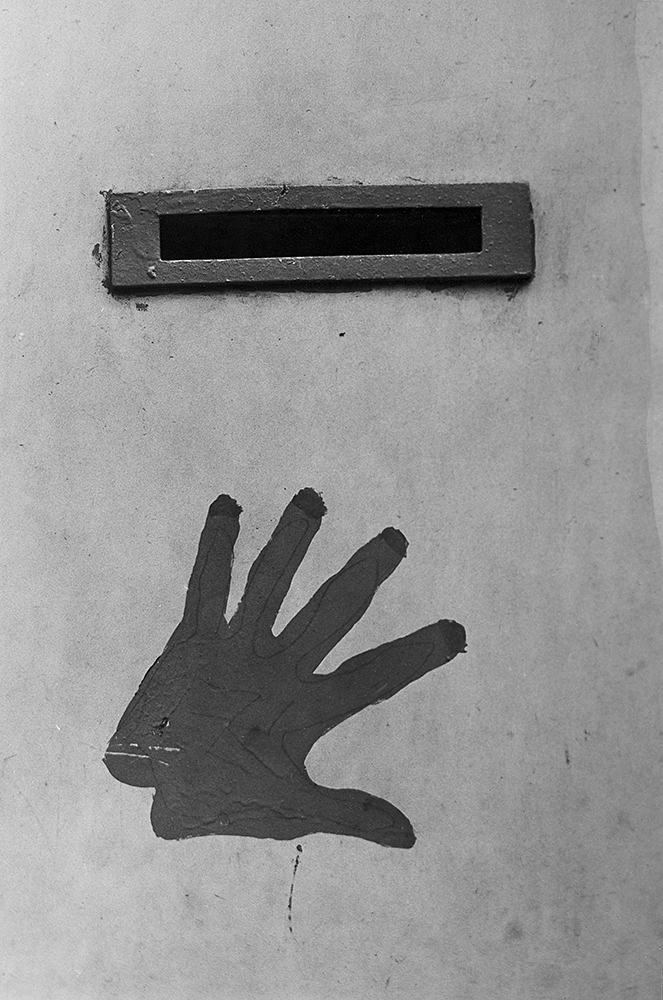
Title image:
Harold Chapman
The hand on the door: Evil spirits do not enter! (HC) Silver Gelatin Print (Fiber), Size 9 by 6 ½” on 9 ⅜ by 7”, signed. Published in Harold Chapman – Beats A Paris, 1957 – 1963, page 123
Part 01 (Courtesy of R. Goellnitz and R. Madera Goellnitz, ©Photos by Harold Chapman ©Text by the Authors
25 Years ago, in 1998, Harold Chapman’s work appeared in the thirtieth-anniversary issue of Creative Camera, a leading British photographic magazine, to which he had contributed thirty years previously in the first issue. Interviewed in December 1968, Chapman had declared: “…there is no need for the contrived shot. Pictures are everywhere. So why set up a photograph when the natural one is infinitely better?” He added: “I am photographing for the future, not for the present… All I aim for is to record the trivial things that ordinary people use and consider unimportant.”
Harold Chapman wanted to leave visual proof for subsequent generations, who without it could not imagine, what had come before.
“The photographs, regardless of Chapman’s goal to merely document, are astounding, both in subject matter and composition, with the imagery ranging from moody portraiture of the famous and their dingy, single-bed rooms to street scenes featuring disparate juxtapositions of people and background advertisements.”(OC Weekly 4/2012)
In April 2000, Booker Prize-winning British novelist, Ian McEwan, who had met Harold Chapman in 1974, wrote an article about the photographer entitled ‘A Spy in the Name of Art’, which was published in the Saturday Review of the Guardian. Summing up Harold Chapman’s work, he concluded: “If Chapman were merely a chronicler in a great documentary tradition, his achievement would be impressive enough. His lustrous landscapes of the Herault valley in the Languedoc, his priceless record of the Beat Hotel, his omnivorous, year-on-year transcription of daily life and its little undercurrents, would ensure his reputation as a photographer of the first rank. But it was constructive paranoia that made him an artist.”
We appreciate your interest in the work of Harold Chapman and encourage you to contact us, if you have any questions.
Cordially,
Rolf Goellnitz

Harold Chapman
“Stolen kisses, rue de Buci, Paris, 1960’s. Standing outside a café, the boys dare each to steal a kiss from passing girls.“(HC)
Silver Gelatin Print (Resin), Size 6 by 9” on 6 ⅞ by 9 ⅜”, signed on verso Published in Harold Chapman – Beats A Paris 1957 -1963, page 15

Harold Chapman
“1957, December Paris in the rain: Peter Orlovsky and Allen Ginsberg on a double-sided bench, Place Saint-German-des-Prés.“(HC)
Silver Gelatin Print (Resin), Size 13 ¾ by 19 ¾”, signed on verso. Published in Harold Chapman – Beats A Paris 1957 -1963, page 36 and Harold Chapman – The Beat Hotel, page 15
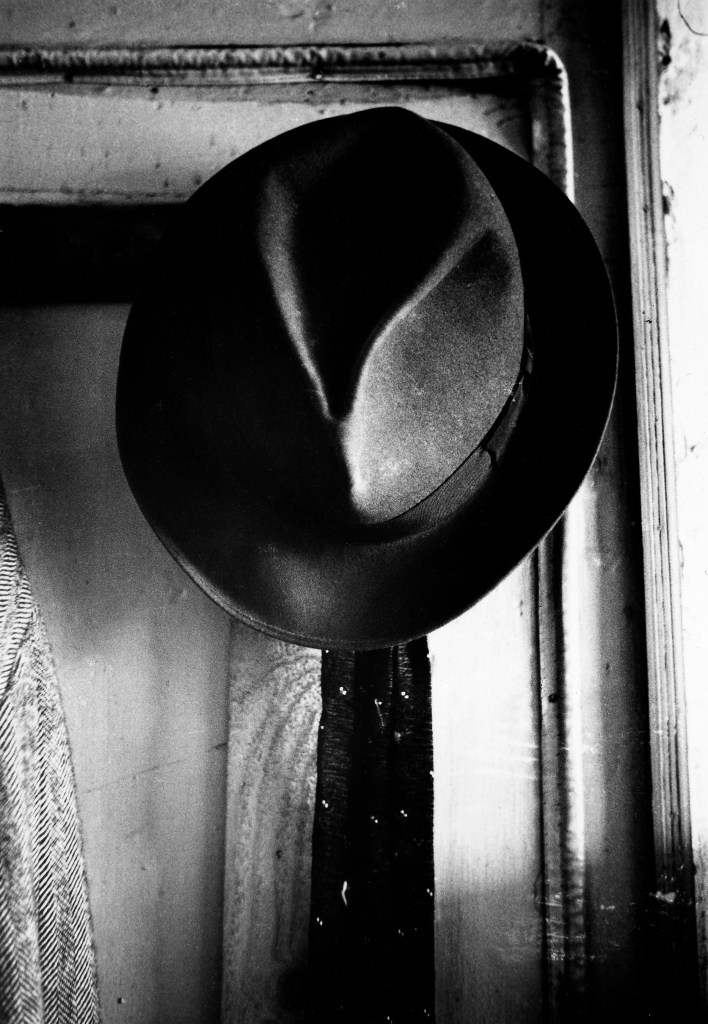
Harold Chapman
“William Burroughs’ anonymous grey trilby. 1961.“(HC)
Silver Gelatin Print (Fiber), Size 6 ⅛ by 4 ¼” on 5×7”, signed on verso. Published in Harold Chapman – Beats A Paris 1957 -1963, page 48 and Harold Chapman – The Beat Hotel, page 124
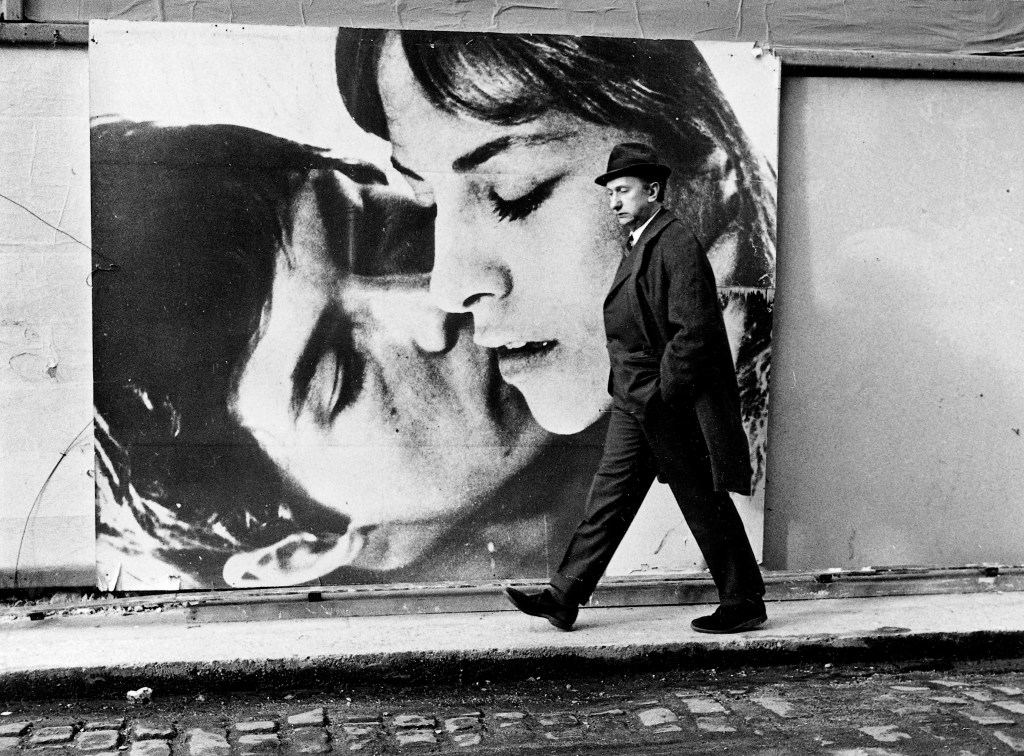
Harold Chapman
From the Billboard Series: “Love on the Left Bank, Giant posters were assembled in sections on wooden panels. Sections, which had no particular meaning, were frequently left standing in side streets for days. Paris 1960’s.“(HC)
Quadtone Inkjet Giclee Print on Archival Cotton Fiber Paper, Size 8 ½” by 11 ¾ on 11 ¾ by 16 ½”, Size ????”, signed on retro, numbered 4/12
Published in Harold Chapman – Beats A Paris 1957 -1963, page 77

Harold Chapman
“An idle broom leans on peeling posters. Moshe Dayan, the eye patched smiling general who swept to victory in the sands of the ‘Six Day War’, shares a wall with pop-art idol Andy Warhol. Paris 1960’s.”(HC)
Silver Gelatin Print (Resin), Size 9 by 6” on 9 ⅜ by 7”, signed on verso.
Published in Harold Chapman – Beats A Paris 1957 -1963, page 89
 theomcgallery
Pingback: Harold Chapman Online Retrospective of the Photographic Oeuvre in 24 Parts (08/24) | theomcgallery
Pingback: Harold Chapman Online Retrospective of the Photographic Oeuvre in 24 Parts (07/24) | theomcgallery
Pingback: Harold Chapman Online Retrospective of the Photographic Oeuvre in 24 Parts (06/24) | theomcgallery
Pingback: Harold Chapman Online Retrospective of the Photographic Oeuvre in 24 Parts (05/24) | theomcgallery